Best Sleeping Positions for Back Pain
Chiro Adjust Team
Chiro Adjust Team
The Sleep-Pain Connection
If you have back pain, you know how much it can affect your sleep. And poor sleep makes back pain worse. It's a frustrating cycle, but the right sleeping position can help break it.
The Best Positions for Back Pain
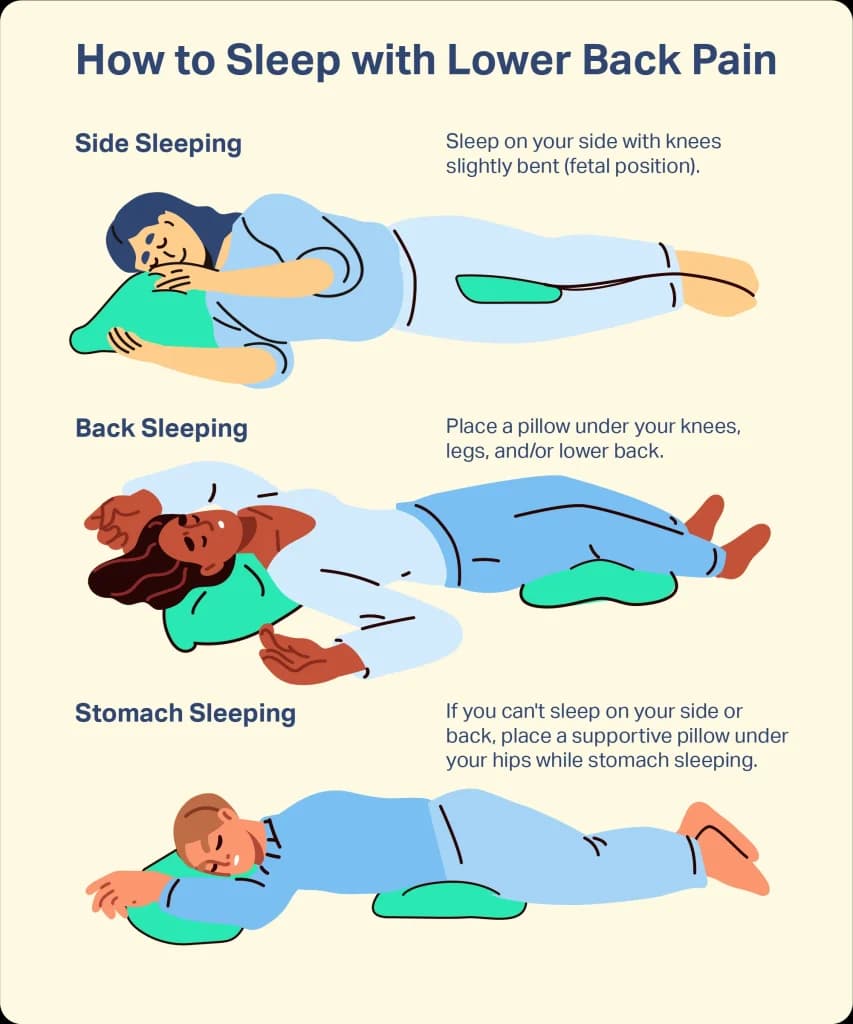
1. On Your Back with Knee Support (Best Choice)
How to do it:
- Lie flat on your back
- Place a pillow under your knees
- Use a small rolled towel under the small of your back if needed
Why it works:
- Distributes weight evenly across your body
- Maintains the natural curve of your spine
- Reduces pressure on your lower back
Best for: General back pain, herniated discs, spinal stenosis
2. On Your Side with a Pillow Between Knees
How to do it:
- Lie on your side with knees slightly bent
- Place a firm pillow between your knees
- Keep your spine aligned (avoid twisting)
Why it works:
- Keeps hips, pelvis, and spine aligned
- Prevents the top leg from pulling your spine out of alignment
- Comfortable for most people
Best for: Lower back pain, pregnancy, sleep apnea
3. Fetal Position (Modified)
How to do it:
- Lie on your side
- Gently draw knees toward chest
- Keep your back relatively straight (not curled too tight)
Why it works:
- Opens the joints in your spine
- Reduces pressure on herniated discs
- Natural, comfortable position for many
Best for: Herniated discs, degenerative disc disease
4. On Your Stomach with Pillow Under Pelvis
How to do it:
- If you must sleep on your stomach, place a thin pillow under your pelvis
- Use a very thin pillow for your head, or none at all
- Consider putting a pillow under your ankles
Why it works:
- The pillow prevents your lower back from sinking
- Reduces hyperextension of the spine
Note: Stomach sleeping is generally not recommended for back pain sufferers, but this modification helps if you can't sleep any other way.
Choosing the Right Pillow
For back sleepers:
- Thin to medium pillow
- Supports natural neck curve
- Consider a contoured cervical pillow
For side sleepers:
- Thick, firm pillow
- Fills the gap between ear and shoulder
- Keeps spine straight
For the space between knees:
- Firm enough to maintain hip width
- Memory foam works well
- Body pillows are another option
Mattress Matters
For back pain, look for:
- Medium-firm support (not too soft, not too hard)
- Good pressure relief at shoulders and hips
- Edge support if you sit on the bed
- Quality materials that won't sag
Consider your weight:
- Lighter individuals: slightly softer
- Heavier individuals: firmer support
When to replace: Every 7-10 years, or sooner if you notice sagging or wake up stiff
Transitioning to a New Position
If your current position causes pain, changing takes time:
Week 1-2: Start in the new position, but don't stress if you move Week 3-4: Use pillows to help maintain the position Month 2+: Your body adapts and the new position feels natural
Getting In and Out of Bed
Getting up:
- Roll onto your side
- Use your arms to push yourself up
- Swing your legs off the bed
- Stand up straight
Getting in:
- Sit on the edge of the bed
- Lower yourself onto your side
- Draw your legs up
- Roll to your preferred position
What to Avoid
- Sleeping on a saggy mattress
- Pillows that are too high or too flat
- Falling asleep on the couch
- Reading or watching TV in bed (leads to awkward positions)
- Using your phone in bed (hello, neck strain)
When Sleep Position Isn't Enough
If you've optimized your sleep position and still wake up in pain, consider:
- Chiropractic care to address underlying issues
- Stretching before bed and upon waking
- A mattress topper or new mattress
- Evaluation for conditions like sleep apnea
Conclusion
The right sleeping position won't cure back pain, but it can significantly reduce nighttime discomfort and morning stiffness. Experiment with these positions and give your body time to adjust. Combined with proper chiropractic care, you can break the cycle of pain and poor sleep.