Wellness Tips
January 20, 20262 min read
The Ultimate Guide to Better Sleep Posture
Chiro Adjust Team
Chiro Adjust Team
Why Sleep Posture Matters
You spend roughly one-third of your life sleeping. That's thousands of hours in positions that can either support your spine or strain it. Poor sleep posture is one of the most common causes of morning stiffness, back pain, and neck pain.
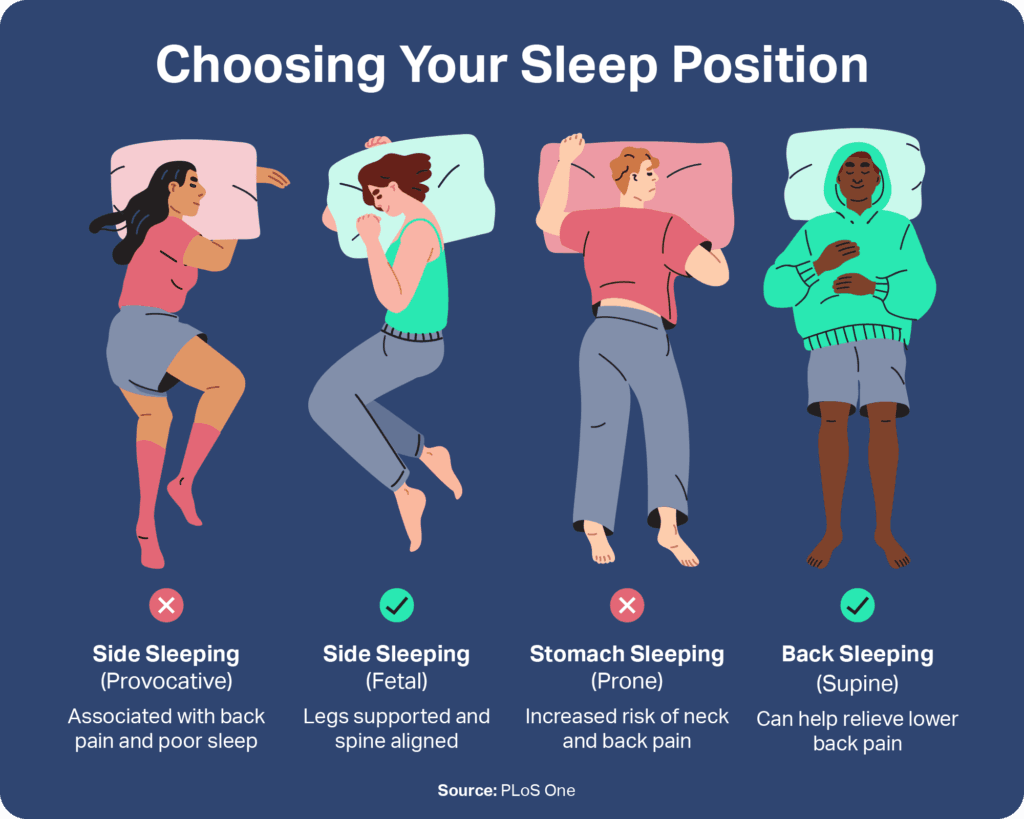
The Best Sleeping Positions
1. On Your Back (Best Overall)
Benefits:
- Distributes weight evenly
- Maintains neutral spine alignment
- Reduces pressure points
- Minimizes wrinkles (bonus!)
Tips for back sleepers:
- Use a pillow that supports the natural curve of your neck
- Place a small pillow under your knees to reduce lower back strain
- Choose a medium-firm mattress
2. On Your Side (Second Best)
Benefits:
- Good for those with sleep apnea or snoring
- Reduces acid reflux when sleeping on the left side
- Comfortable for most people
Tips for side sleepers:
- Use a thick pillow to keep your head aligned with your spine
- Place a pillow between your knees
- Avoid curling into a tight fetal position
3. On Your Stomach (Least Recommended)
Challenges:
- Forces your neck to turn to one side
- Flattens the natural curve of your spine
- Can strain lower back and neck
If you must sleep on your stomach:
- Use a very thin pillow or no pillow at all
- Place a pillow under your pelvis
- Consider training yourself to side sleep
Choosing the Right Pillow
Your pillow should:
- Keep your head, neck, and spine aligned
- Match your sleeping position (thicker for side, thinner for back)
- Be replaced every 1-2 years
- Support without elevating your head too high
Mattress Matters
A good mattress should:
- Be firm enough to support your spine
- Be soft enough to cushion pressure points
- Be replaced every 7-10 years
- Match your body type (heavier individuals often need firmer support)
Creating a Sleep-Friendly Environment
Beyond posture, consider:
- Temperature: Keep your bedroom cool (65-68°F)
- Darkness: Use blackout curtains or a sleep mask
- Quiet: Consider white noise if needed
- Screen-free: Avoid devices 30 minutes before bed
Morning Stretches
Start your day right with these simple stretches:
- Knee-to-chest stretch (30 seconds each side)
- Gentle spinal twist (20 seconds each side)
- Cat-cow stretch (10 repetitions)
Signs Your Sleep Posture Needs Work
- Waking up with stiffness or pain
- Numbness or tingling in your arms
- Frequent headaches in the morning
- Feeling unrested despite adequate sleep
Conclusion
Improving your sleep posture is one of the most impactful changes you can make for your spinal health. Combined with the right pillow and mattress, good sleep positioning can dramatically reduce pain and improve your quality of life.